
40 S. Stephanie St., Suite 201, Henderson, NV
Mon–Fri · 8:00–5:00
If you are on active duty, or you are married to someone who is, and your marriage is ending, you already have enough on your plate. Orders. Deployments. A household that may be spread across two time zones. Now add a court case on top of it? The military divorce lawyers at Kelleher & Kelleher can help.
Or send the form. A member of our team will call you to discuss your options, obligation free.
Reviewed by an attorney, not a call center.
one spouse only has to live in Nevada for six weeks before filing
Here is the good news: Nevada is one of the friendliest states in the country for a military divorce. The residency rules are short, the process moves quickly, and the courts here see military families every single day. At Kelleher & Kelleher, we have handled family law cases in Las Vegas for years, including plenty for the families stationed at Nellis and Creech. Call us at (702) 384-7494 and we will walk you through it.
Two reasons: a short residency requirement and speed.
Under NRS 125.020, one spouse only has to live in Nevada for six weeks before filing. Compare that to states that make you wait six months or a full year. If you got here on PCS orders in March, you can file in May.
The second reason is speed. If you and your spouse agree on the big items (property, debts, custody, support), an uncontested Nevada divorce can be finished in weeks, not years. No trial, no discovery fight, and in many cases no court appearance at all.

Nevada courts will take your case if at least one spouse has lived here for six continuous weeks. You need two things:
You have to be physically present in Nevada, and you have to intend to stay for the foreseeable future. That second part trips people up. It does not mean you plan to retire here. It just means you have no immediate plans to pack up and leave.
You will also need a third party (a friend, a neighbor, a coworker) to sign an Affidavit of Resident Witness confirming you have been living here for the required six weeks. It is a short form. We handle it for our clients.
This is the question we get most often, and the answer usually surprises people. If your spouse lives in Nevada and meets the six-week requirement, a Nevada court can handle your divorce even if you are on the other side of the planet.
In other words, you do not both have to be here. One of you does.
you can ask the court for a stay (a postponement) of at least 90 days
Getting served with divorce papers while you are on a ship, in the field, or halfway through a deployment is a real problem. Federal law knows that. The Servicemembers Civil Relief Act (SCRA), 50 U.S.C. 3901 through 4043, exists so your service does not get used against you in a civil case.
If your military duties keep you from participating in the case, you can ask the court for a stay (a postponement) of at least 90 days. The judge does not get to say no if you meet the requirements, which generally include a letter from your commander stating that leave is not authorized.
Imagine you get served two weeks before a six-month deployment. Without the SCRA, you might be defaulted while you are gone, and a judge could decide custody and property without ever hearing from you. With it, you get the case paused until you can actually take part.
You can also waive your SCRA protections and let the case move forward on the normal schedule. Sometimes that is the right call, especially in an uncontested case where you just want it done. But a waiver gives up real rights, and you cannot un-ring that bell. Talk to a lawyer before you sign one. Call us at (702) 384-7494 first.

your spouse has 21 days to file a response
You can file on your own. Plenty of people do. But military divorces add layers that a standard divorce does not have, including retirement division, TRICARE, and custody schedules built around deployments. Getting those wrong can cost you for decades.
If you are stationed at or near Nellis Air Force Base, start with the legal assistance office on base. Many installations offer free legal advice to active-duty members. They cannot represent you in court, but they are a good first stop.
There are two paths, and which one you take depends entirely on whether you and your spouse agree.
A Joint Petition is for an uncontested divorce. You both sign, you both agree on everything, and you file it together. This is the fast lane.
A Complaint for Divorce is for a contested divorce. One spouse files it and then serves it on the other. This is the path when you cannot agree on property, custody, or support.
Forms and instructions are available free through the Nevada Supreme Court Self-Help Center.
If you file a Complaint, your spouse has to be formally notified, usually by a process server. If your spouse is also in the military and currently deployed, service gets more complicated. You may need to coordinate with a commanding officer or follow base-specific rules. This is a common place for cases to stall.
Once served, your spouse has 21 days to file a response. Miss that deadline and the court can enter a default, which means the case moves ahead without their input. If military duties are the reason for the delay, the SCRA allows a request for more time.
In an uncontested case, a judge reviews the paperwork and signs a Final Decree of Divorce, often without anyone setting foot in a courtroom.
In a contested case, expect hearings, likely mediation, and a judge who will decide whatever you two could not. Once the decree is signed and filed, you are divorced.
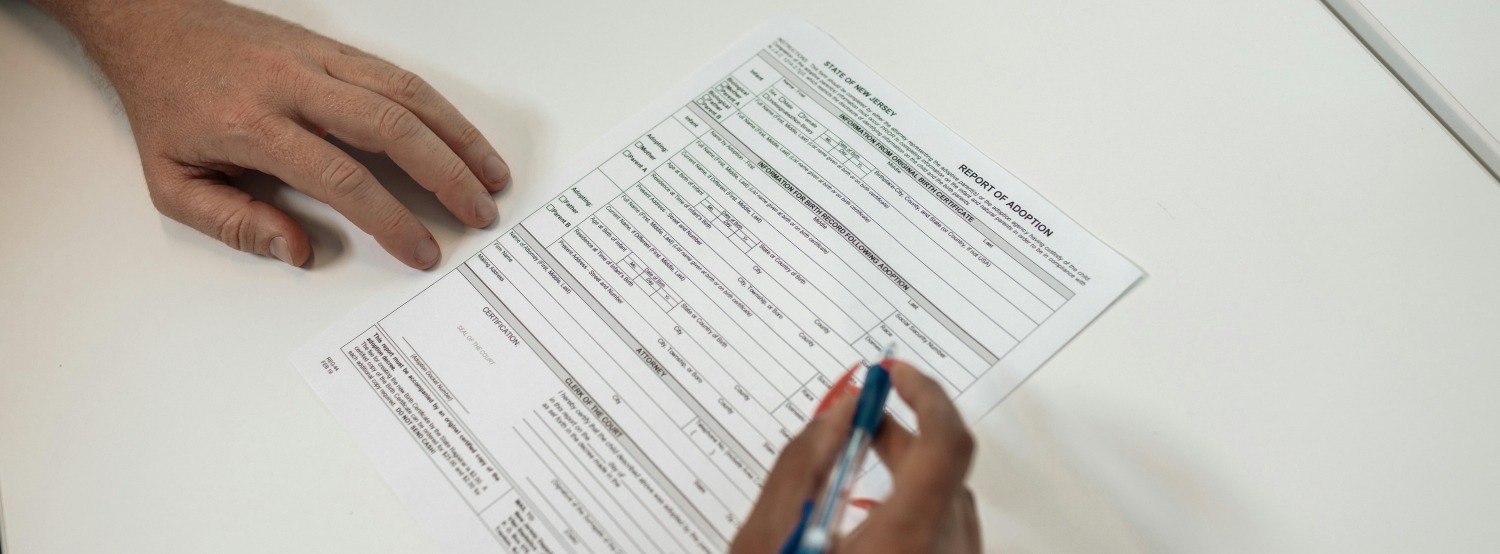
This is where the real money is, and it is the part people most often get wrong.
The Uniformed Services Former Spouses’ Protection Act (USFSPA), 10 U.S.C. 1408, lets state courts treat military retired pay as marital property that can be divided in a divorce. If you served for many years while married, your spouse may be entitled to a share of your retirement.
Almost everyone gets this one wrong. The 10/10 rule says that the Defense Finance and Accounting Service (DFAS) will send the former spouse their share directly if the marriage lasted at least 10 years and overlapped with at least 10 years of creditable military service.
Here is what it does NOT mean: it does not decide whether a spouse gets a share at all. That is up to the court.
Imagine you were married for 12 years, but only 7 of those years overlapped with your creditable service. The 10/10 rule is not met, so DFAS will not cut a separate check. A Nevada court can still award your spouse a portion of that retirement. It just means the payment has to come from you instead of from DFAS.
If you take one thing from this page, take this: the 10/10 rule is about how the money gets paid, not about who is entitled to it.
Sometimes. It depends on the 20/20/20 rule, which requires all three of the following: at least 20 years of marriage, at least 20 years of creditable service, and at least 20 years where those two overlapped.
Hit all three and an unremarried former spouse keeps full TRICARE coverage along with commissary and exchange privileges. Fall short and coverage typically ends when the divorce is final, though a 20/20/15 overlap can buy one year of transitional coverage.
Run the dates before you agree to anything. A spouse who is at 19 years and 6 months of overlap is in a very different position than one at 20 years and 1 month.
A divorce decree can require the service member to keep Survivor Benefit Plan (SBP) coverage in place for the former spouse. Without it, the retirement payments stop when the service member dies. There are strict deadlines for electing former spouse coverage, and missing one can wipe out a benefit worth hundreds of thousands of dollars over a lifetime. Get this in the decree. Do not leave it as a handshake.

Nevada courts decide custody based on the best interest of the child under NRS 125C.0035. Your service is not held against you. Judges here are used to military parents.
What the court does want is a plan. A parenting plan for a military family should spell out what happens during long deployments, how TDY assignments are handled, who covers childcare while you are gone, and how you stay in contact by video call, phone, or mail. Vague plans fall apart the moment orders come down. Detailed ones hold up.

Nevada uses an income-based formula under NRS Chapter 125B. For service members, the court looks at more than your base pay. BAH and BAS count as income.
Imagine your base pay is $3,200 a month. Add $2,100 in BAH and roughly $460 in BAS, and the court is looking at about $5,760 a month, not $3,200. That difference changes the support number substantially, and it is one of the most common surprises military parents run into.
The flip side matters too. If you are the receiving parent, do not let the other side calculate support off base pay alone.
Orders, LES statements, ID cards, retirement points statements, marriage certificate. Keep them somewhere that is not a barracks room or a storage unit you might lose access to.
Legal assistance offices on base can answer questions and review documents at no cost.
Clark County courts push mediation for a reason. It is faster, it is cheaper, and if you have kids, it keeps things from turning into a war you both have to keep fighting for the next decade.
Chaplains, military family life counselors, and Military Family Support Centers exist for exactly this. Use them.
A military divorce has moving parts a regular divorce does not, and most of them involve money or time with your kids. Retirement division, TRICARE eligibility, SBP elections, and a custody schedule that survives a deployment are all things you want handled right the first time, because fixing them later is expensive and sometimes impossible.

Yes. If you have kept Nevada as your home of record and have not established legal domicile somewhere else, or if your spouse meets the six-week residency requirement, Nevada can hear your case.
No. Your attorney can handle most of the paperwork, and uncontested divorces often do not require a hearing at all. If you are deployed, you can grant a Power of Attorney so someone can sign on your behalf where that is permitted. Just make sure it complies with military regulations.
Immediately. Nevada has no waiting period. Once the Final Decree of Divorce is signed and filed, you are free to remarry.
Call (702) 384-7494, or send the form and a member of our team will call you to discuss your options, obligation free.
40 S. Stephanie St., Suite 201, Henderson, NV 89012
Monday–Friday, 8:00am to 5:00pm

Since 1996, John has practiced law in Nevada focusing primarily on family law.

Christine has practiced law in Nevada since 1996, when she graduated from Brigham Young University.

Randy has practiced law in Nevada since 1998 and is licensed in both the State of Nevada and the State of Utah.

Nathan has practiced law in Nevada since 1996 in areas of family law, consumer bankruptcy and estate planning.

During law school, Noah was heavily involved with the Latin American Law Student Association and the Veterans Legal Services Clinic.
The good-heartedness and efficiency at this law firm trickle down from the founders and their staff members are very respectful.
I literally can not say enough good things about the team at Kelleher & Kelleher. They were so professional, direct and most importantly effective while I was going through my divorce. They were worth every penny and I will continue to refer to them. John Kelleher is well-prepared, thoughtful and fights for his clients. Everyone I dealt with at the office was friendly and supportive and made a challenging time much more bearable.
They are the best of the best, and I know my attorneys! In my long, drawn-out, and complicated case, John was wonderful. The whole firm was so dedicated and professional and really paid attention to all my needs and concerns. I couldn’t have asked for a better outcome. I highly recommend this firm for any family.
You do not have to figure this out between duty days. Kelleher & Kelleher has helped Las Vegas military families through this process, and we know what these cases require. Call us today at (702) 384-7494. Let’s talk about your situation and what your options really are.